
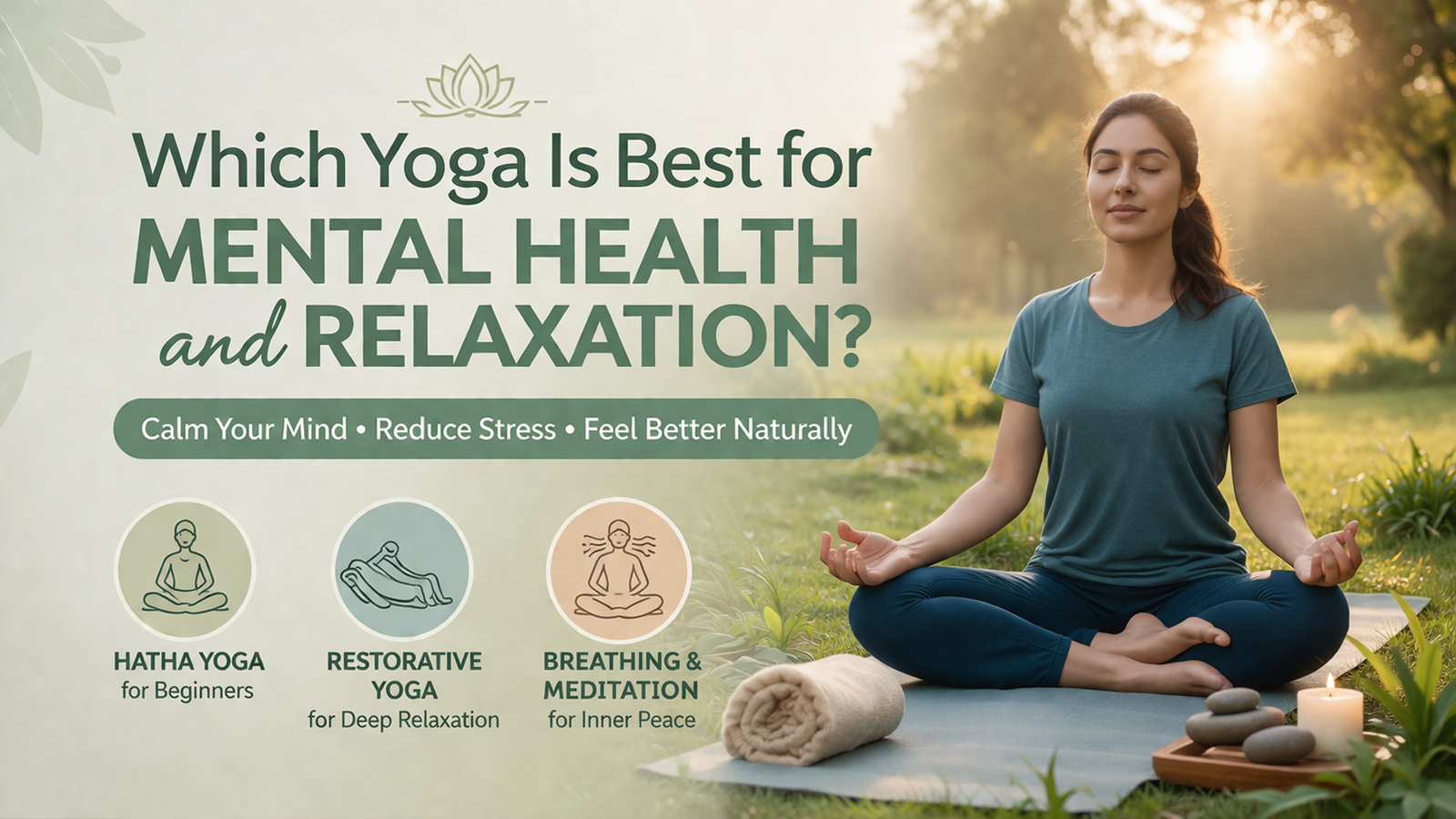
Many people nowadays are experiencing stress and anxiety due to excess of overthinking. Concerns usually fill the mind and one does not easily attain peace. Due to this, people are seeking natural and easy methods in a bid to achieve mental health.
Yoga has been regarded as the most effective remedy to stress and relaxation. Not only is it good to the body but it is also beneficial to the mind. There are various kinds of yoga and each one of them is meant to assist in a special manner.
Within this blog, the explanation that will be presented is the best yoga to use when it comes to mental health and relaxation in a simple and easy manner.
Impact on Mental Health
Yoga may be said to be a practice that involves physical poses, breathing and meditation. It has been a subject of use over a long time to enhance body and mind. In case of yoga practice:
Stress levels are reduced the mind is calmed better sleep is achieved Anxiety is controlled When the body is relaxed, it is believed that the mind is relaxed. This is the reason why yoga is suggested to mentality calmness.
Types of Yoga for Improving Mental Health
There are different types of yoga which are practiced throughout the world but here are some of the types that can help you in better way.
1. Hatha Yoga (Good for beginners)
It is considered the easiest form of yoga. Slow movements and simple poses are included in it to help beginners learn it easily
In this yoga:
- Breathing is controlled
- The body is gently stretched
- The mind is relaxed
Benefits:
- Stress is reduced
- Mind is calmed
- Focus is improved
2. Vinyasa Yoga (For Stress Release)
In this type of yoga, movements are connected with breathing. The body is moved in a smooth flow.
Because of this:
- Energy is increased
- Stress is released
- The mind is refreshed
This yoga is helpful for people who feel tired or mentally blocked.
Benefits:
- Anxiety is reduced
- Mood is improved
- Body becomes active
3. Yin Yoga (Deep Relaxation)
This type of yoga is a very slow and of calming type where poses are held for a longer time.
During this practice:
- The body is kept still
- Deep relaxation is achieved
- The mind is allowed to rest
It is perfect for people who want peace and calmness.
Benefits:
- Deep stress is released
- Mind becomes quiet
- Emotional balance is improved
4. Restorative Yoga (Best for Anxiety)
This type of yoga is designed for full relaxation. Props like pillows and blankets are used to support the body.
Very little movement is done, and the body is allowed to rest.
Benefits:
- Anxiety is reduced
- Nervous system is relaxed
- Sleep quality is improved
This yoga is best for people who feel overwhelmed or stressed.
5. Kundalini Yoga (For Emotional Healing)
Kundalini yoga includes breathing, chanting, and meditation.
Energy inside the body is awakened, and emotional healing is supported.
Benefits:
- Negative thoughts are reduced
- Mind becomes positive
- Inner peace is developed
Best Yoga Poses for Mental Health
Some simple yoga poses can be practiced daily for relaxation.
1. Child’s Pose (Balasana)
- The body is rested on the floor
- The mind is calmed
2. Mountain Pose (Tadasana)
- Balance is improved
- Focus is increased
3. Legs Up the Wall (Viparita Karani)
- Stress is reduced
- Blood flow is improved
4. Corpse Pose (Savasana)
- Full relaxation is achieved
- Mind becomes peaceful
These poses are simple and can be done at home easily.
Breathing Techniques for Stress Relief
Breathing exercises are an important part of yoga. They are also known as pranayama.
1. Deep Breathing
- Slow breathing is done
- The mind is relaxed
2. Alternate Nostril Breathing
- Balance is created in the mind
- Anxiety is reduced
3. Belly Breathing
- Stress is lowered
- Calmness is increased
When breathing is controlled, the mind is automatically calmed.
Daily Yoga Routine for Relaxation
A simple daily routine can be followed:
- Start with deep breathing (5 minutes)
- Do simple yoga poses (10–15 minutes)
- End with meditation or Savasana (5–10 minutes)
This routine can be done at home without any equipment.
Tips to Get Best Results from Yoga
For better mental health, some tips should be followed:
- Yoga should be practiced daily
- A quiet place should be chosen
- Comfortable clothes should be worn
- Focus should be kept on breathing
- Patience should be maintained
Results may not be seen immediately, but improvement will be noticed over time.
Why Yoga Is Better Than Other Methods?
Many people use medicines for stress and anxiety. But yoga is a natural method.
With yoga:
- No side effects are caused
- Long-term benefits are achieved
- Overall health is improved
That is why yoga is preferred by many people.
Conclusion
One of the most useful methods to increase the mental health and relaxation is Yoga. Hatha, Yin, Restorative yoga, and the other types are particularly helpful in order to ease the mind.
The constant training gets rid of stress and leads to inner peace. Even basic poses and breathing exercises would make a huge difference. Health and Happy Yoga is a great comfort and help to an already healthy mind.
Frequently Asked Questions (FAQs).
Which type of Yoga is best for managing stress?
Hatha Yoga and Restorative Yoga can help manage stress & anxiety as they help to calm the mind & relax the body.
How mental health can be improved by Yoga?
Yoga can effectively improve mental wellness as it tends to relieve stress, help manage anxiety and create positive & peaceful thoughts.
What Is the Recommended Daily Yoga Duration?
20-30 minutes daily of yoga practice will provide beneficial results – longer durations yield even more benefits.
Should I Do Yoga or Meditate?
You can use either Yogic practices or meditation practice to improve your overall mental health by calming your mind; however, yoga incorporates movement/breathing into physical stretching poses while meditation consists of stillness/quietness. Both may be practiced separately or combined together.